Placing a delicate crystal coupe on a tray requires a steady hand. The moment the bubbles begin to climb along the smooth, hand-blown curve, you realize this isn’t just a glass-it’s part of the ritual. For generations, the coupe has signaled celebration, elegance, conviviality. Yet not all coupes are created equal. Some shimmer with clarity, others feel unbalanced in the hand, and a few carry the unmistakable mark of true craftsmanship. Choosing the right one means understanding both form and function.
Technical criteria for selecting your crystal coupe
Weight and balance in hand
A well-made crystal coupe should feel substantial but not heavy. The stem must offer a secure grip, especially during a crowded toast. This is where mouth-blown crystal stands apart: each piece has a unique balance point, shaped by the artisan’s hand to ensure stability. A poorly weighted glass wobbles with the slightest movement-something to avoid when serving vintage champagne. For those seeking to complete their set, discovering a collection of luxury champagne flutes can offer the perfect contrast to the wider coupe style.
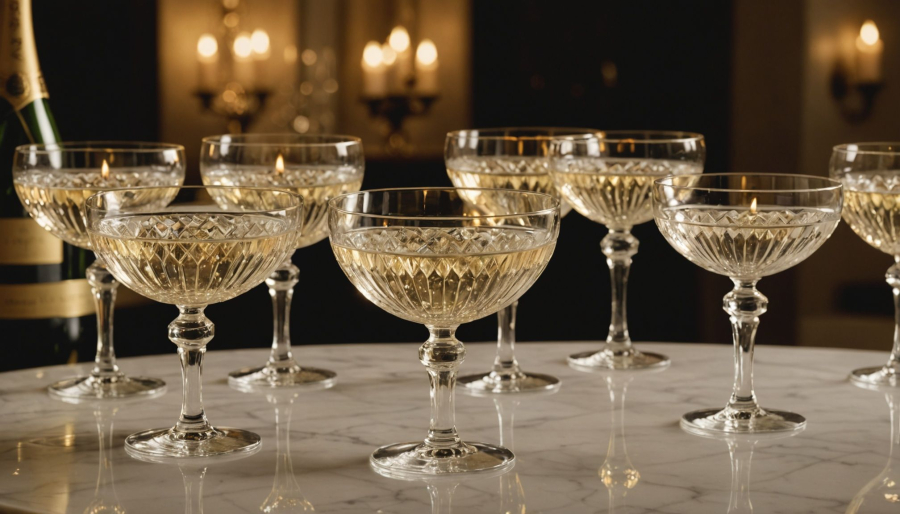
The clarity and refractive index
High-end crystal isn’t just about thickness-it’s about brilliance. The finest pieces allow light to pass through cleanly, highlighting the golden hue of the wine without distortion. This optical purity comes from lead content (typically around 24%), which increases the refractive index and gives the glass its signature sparkle. When held to a candlelight dinner, a top-tier coupe doesn’t just hold champagne-it enhances the ambiance.
| Coupe Style | Best Usage | Key Visual Feature |
|---|---|---|
| Vintage | Older, complex vintages | Smooth, wide bowl with subtle curve |
| Faceted | Cocktail hours, evening events | Deep geometric cuts that catch the light |
| Contemporary | Modern table settings | Minimalist lines, shorter stem |
Essential styles for festive gatherings
Hand-cut heritage design
There’s a reason hand-cut patterns remain a hallmark of luxury crystal. Each groove and facet is carved by hand, creating a tactile surface that interacts dynamically with light. Under chandeliers or candle glow, these cuts make the champagne appear to shimmer from within. This isn’t mere decoration-it’s an extension of the art de vivre, where every detail contributes to the sensory experience. The depth of engraving also influences how bubbles rise, adding a subtle visual rhythm to the pour.
- Wedding toasts - The coupe’s wide rim makes it ideal for a synchronized clink among guests.
- Vintage cocktail hours - Perfect for serving a Hemingway Daiquiri or Kir Royale with panache.
- Anniversary dinners - A hand-cut coupe elevates the moment, echoing the timelessness of the occasion.
- Mid-century themed parties - These glasses are a stylish nod to 1920s glamor and jazz-age elegance.
- Holiday celebrations - Their reflective surfaces amplify festive lighting, adding warmth to winter evenings.
Aroma and taste: The coupe versus the flute
The myth that flutes are always superior to coupes persists, but it overlooks a key truth: the wide opening of a coupe allows complex aromas to breathe and evolve. While flutes preserve carbonation longer, they can muffle the nuances of an older vintage. A coupe, by contrast, releases the wine’s bouquet more freely-ideal for mature champagnes with developed notes of brioche, dried fruit, or nuttiness. Young, high-pressure sparklers may lose their fizz too quickly in a coupe, but a well-aged bottle will reveal layers otherwise hidden. It’s not about which glass is better-it’s about matching the vessel to the wine’s character.
Practical maintenance of fine crystalware
Washing and temperature precautions
Caring for crystal coupes begins with water temperature. Sudden shifts-like placing a chilled glass into hot water-can cause thermal shock, leading to cracks or cloudiness. Lukewarm water is safest. Hand-washing with a mild, non-abrasive detergent preserves the glass’s surface. Dishwashers, even on gentle cycles, risk micro-scratches over time due to mineral deposits and mechanical contact. After washing, dry immediately with a soft microfiber cloth to prevent water spots. Store coupes upright in a dust-free cabinet, ideally with felt-lined dividers to avoid stem breakage. Proper care ensures these pieces remain heirloom-worthy for decades.
The art of serving at the table
Temperature control secrets
Serving champagne in a coupe isn’t just about presentation-it starts with preparation. Chilling the glass beforehand helps maintain the wine’s ideal serving temperature, especially in warm rooms. A cold coupe acts as a buffer, slowing down the warming process once the pour is complete. This is particularly useful for extended toasts or seated dinners where glasses may sit untouched for minutes.
The perfect decorative pour
Pouring into a coupe requires technique. Tilt the glass slightly and aim the stream toward the side of the bowl. This minimizes foam and prevents overflow, allowing the mousse to rise gracefully. The shallow depth means even a small overpour can spill, so precision matters. When done right, the result is a glass that looks full but leaves room for the bubbles to dance-a visual cue that the moment is about to begin.
Table placement etiquette
In a formal setting, the coupe belongs to the right of the dinner plate, above the water glass and aligned with other stemmed glasses. Its position follows the “drinking order” rule: liquids from left to right, water to wine. When multiple wine glasses are present, the coupe typically replaces the white wine glass for sparkling service. Avoid overcrowding-leave enough space between stems so guests can lift their glass without clinking accidentally. This small detail makes a noticeable difference in the flow of the evening.
Commonly asked questions
Is it true that coupes are harder to transport on a tray?
Yes, their low center of gravity and wide bowl make them more prone to tipping on unstable surfaces. A steady hand and a non-slip tray liner can help reduce the risk during service.
What is the biggest mistake people make when cleaning crystal coupes?
Using hot water on a cold glass or harsh detergents that dull the surface. These practices can lead to cloudiness or even cracking due to thermal shock.
Can I use a coupe for cocktails instead of champagne?
Absolutely. The coupe is ideal for short, spirit-forward drinks like a classic Daiquiri or a Sidecar, where aroma and presentation are key.
When should I choose a coupe over a tulip-shaped glass?
Opt for a coupe when serving older, more complex vintages that benefit from aeration. The tulip shape is better for preserving bubbles in younger, highly carbonated wines.
